
ডুপ্লেক্স বাড়ির ডিজাইন
ডুপ্লেক্স হাউস ডিজাইন, আধুনিক রাজকীয় ডুপ্লেক্স বাড়ি
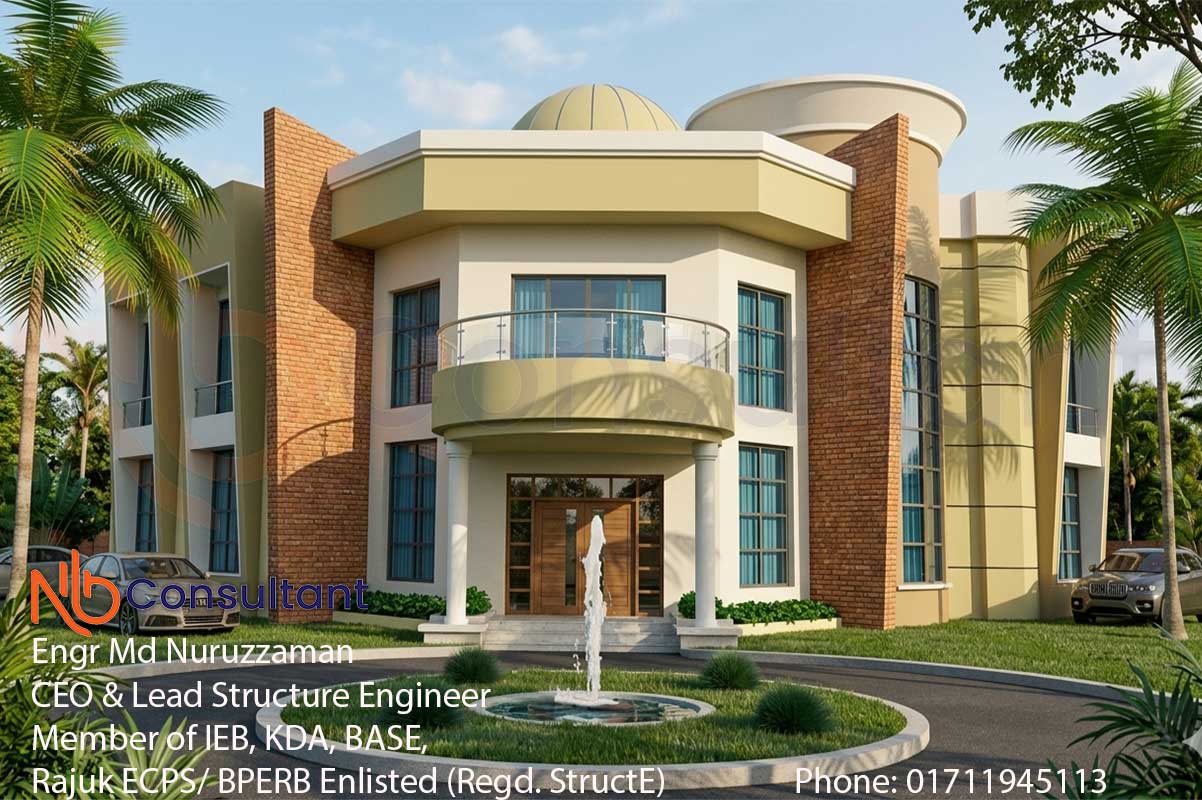
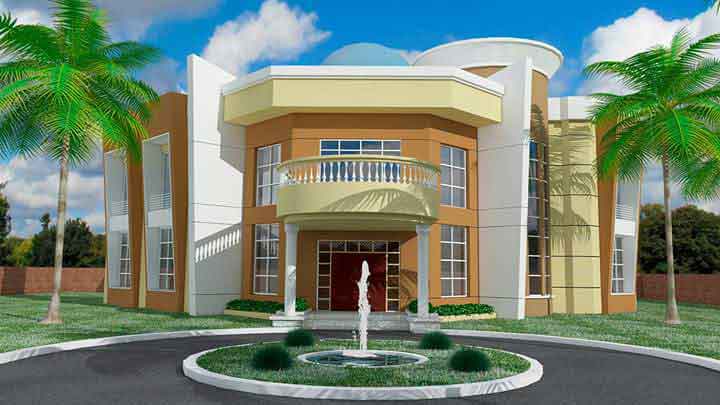
ডুপ্লেক্স বাড়ি ডিজাইন, রাজকীয় ডুপ্লেক্স বাড়ি, অত্যন্ত আধুনিক ও আকর্ষণীয়
ডুপ্লেক্স বাড়ি ডিজাইন, রাজকীয় ডুপ্লেক্স বাড়ি, অত্যন্ত আধুনিক ও আকর্ষণীয় ডিজাইন। অত্যন্ত আধুনিক ডিজাইন।
খরচ : ২ কোটি


এই রকম সুন্দর বাড়ির ডিজাইন করার জন্য যোগাযোগ করুন
বাড়ির ভিডিও দেখুন
মাস্টারিং দ্য আর্ট অব দ্য ডুপ্লেক্স হাউস ডিজাইন: এ গাইড টু ইনোভেশন, ইনভেস্টমেন্ট, অ্যান্ড ইন্টেনশনাল লিভিং
দ্য কনসেপ্ট অব এ ডুপ্লেক্স হাউস ডিজাইন হ্যাজ আন্ডারগন এ রেডিক্যাল ট্রান্সফরমেশন। নো লংগার অ্যাসোসিয়েটেড সোলি উইথ ইউটিলিটারিয়ান, কুকি-কাটার মাল্টি-ফ্যামিলি হাউজিং, দ্য মডার্ন ডুপ্লেক্স ইজ এ সোফিস্টিকেটেড স্থাপত্য নকশা রেসপন্স টু দ্য শিফটিং ল্যান্ডস্কেপ অব রিয়েল এস্টেট, ডেমোগ্রাফিকস, অ্যান্ড লাইফস্টাইল প্রায়োরিটিজ। এমন একটি যুগে যেখানে শহুরে জায়গা একটি প্রিমিয়াম, আন্তঃপ্রজন্মের বসবাস বৃদ্ধি পাচ্ছে, এবং স্মার্ট বিনিয়োগ অত্যন্ত গুরুত্বপূর্ণ, ডুপ্লেক্স তুলনাহীন বহুমুখীতার একটি ডিজাইন সমাধান হিসেবে আবির্ভূত হয়েছে।
আপনি যদি জমির ব্যবহার সর্বাধিক করতে চাওয়া একজন উচ্চাভিলাষী বিনিয়োগকারী হন, আবাসিক ঘনত্বের সীমানাকে এগিয়ে নেওয়া একজন স্থপতি হন, অথবা স্বাধীন বসবাস এবং পারিবারিক সান্নিদ্রের মধ্যে ভারসাম্য খোঁজা কোনো গৃহকর্তা হন, আধুনিকের সূক্ষ্ম বিষয়গুলো বোঝা ডুপ্লেক্স বাড়ি ডিজাইন এর বিপুল সম্ভাবনা উন্মোচনের চাবিকাঠি।
দিস গাইড মুভস বিয়ন্ড দ্য বেসিক্স টু এক্সপ্লোর হাউ ইনোভেটিভ ডিজাইন, স্ট্র্যাটেজিক প্ল্যানিং, অ্যান্ড ফোটোরিয়ালিস্টিক ভিজ্যুয়ালাইজেশন (লাইক দ্য স্টানিং কাটওয়ে ভিউ ইন ফিগার 1) আর রেভোলিউশনালাইজিং দিস প্রপার্টি টাইপ, টার্নিং শেয়ার্ড ওয়ালস ইনটু সিম্বলস অব শেয়ার্ড সাকসেস।
আন্ডারস্ট্যান্ডিং দ্য ব্লুপ্রিন্ট: হোয়াট ডিফাইনস এ ডুপ্লেক্স হাউস ডিজাইন?
অ্যাট ইটস কোর, এ ডুপ্লেক্স বাড়ি ডিজাইন ইজ এ সিঙ্গেল ভবন দ্যাট কন্টেইনস টু সেপারেট ডুয়েলিং ইউনিট। দিস ইউনিট আর টিপিক্যালি অ্যারেঞ্জড ইন ওয়ান অব টু কনফিগারেশনস: স্ট্যাকড (ওয়ান ইউনিট অ্যাবাভ দ্য আদার) অর সাইড-বাই-সাইড (শেয়ারিং এ সেন্ট্রাল, ভার্টিক্যাল ফায়ারওয়াল)। হোয়াইল দে শেয়ার এ কমন স্ট্রাকচার, ছাদ, অ্যান্ড ফাউন্ডেশন, ইচ ইউনিট ইজ এ কমপ্লিট, সেলফ-কনটেইনড হোম উইথ ইটস ওন প্রাইভেট এন্ট্রান্স, রান্নাঘর, বেডরুম, বাথরুম, এবং লিভিং স্পেস।
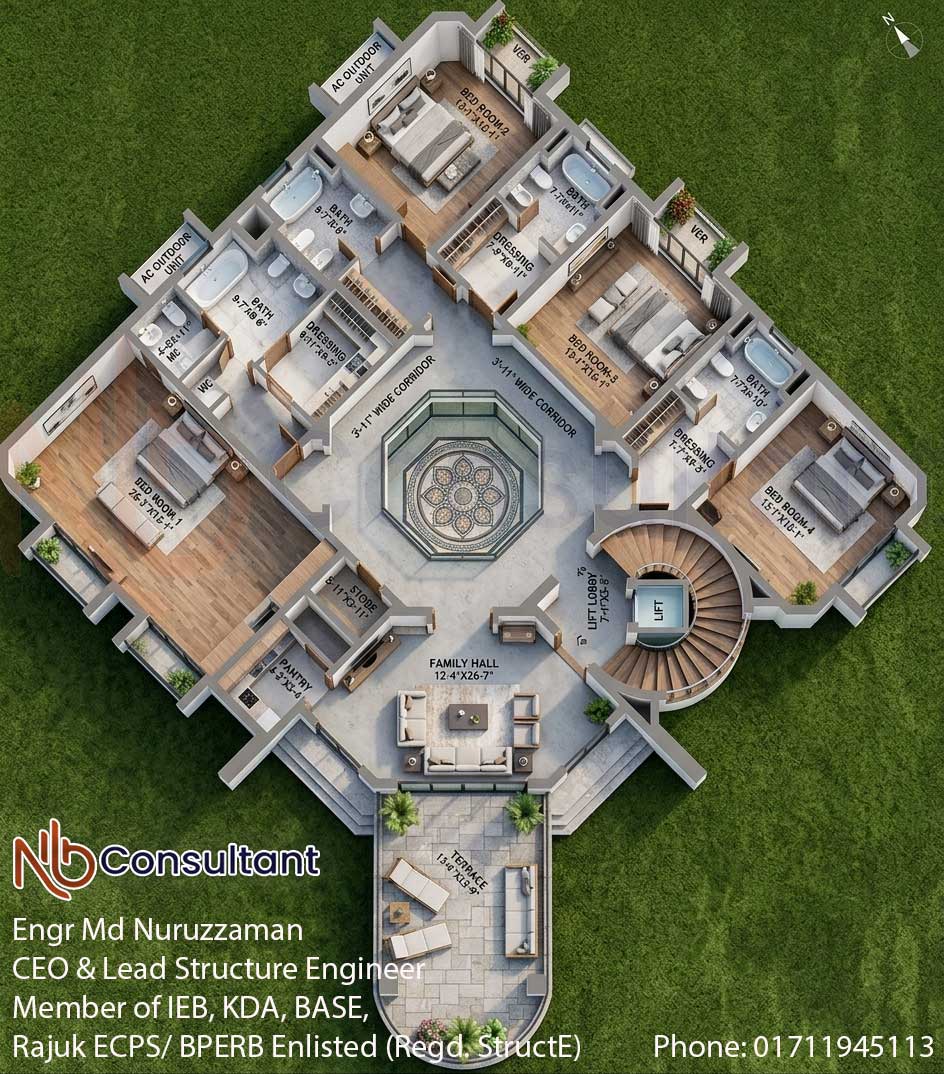
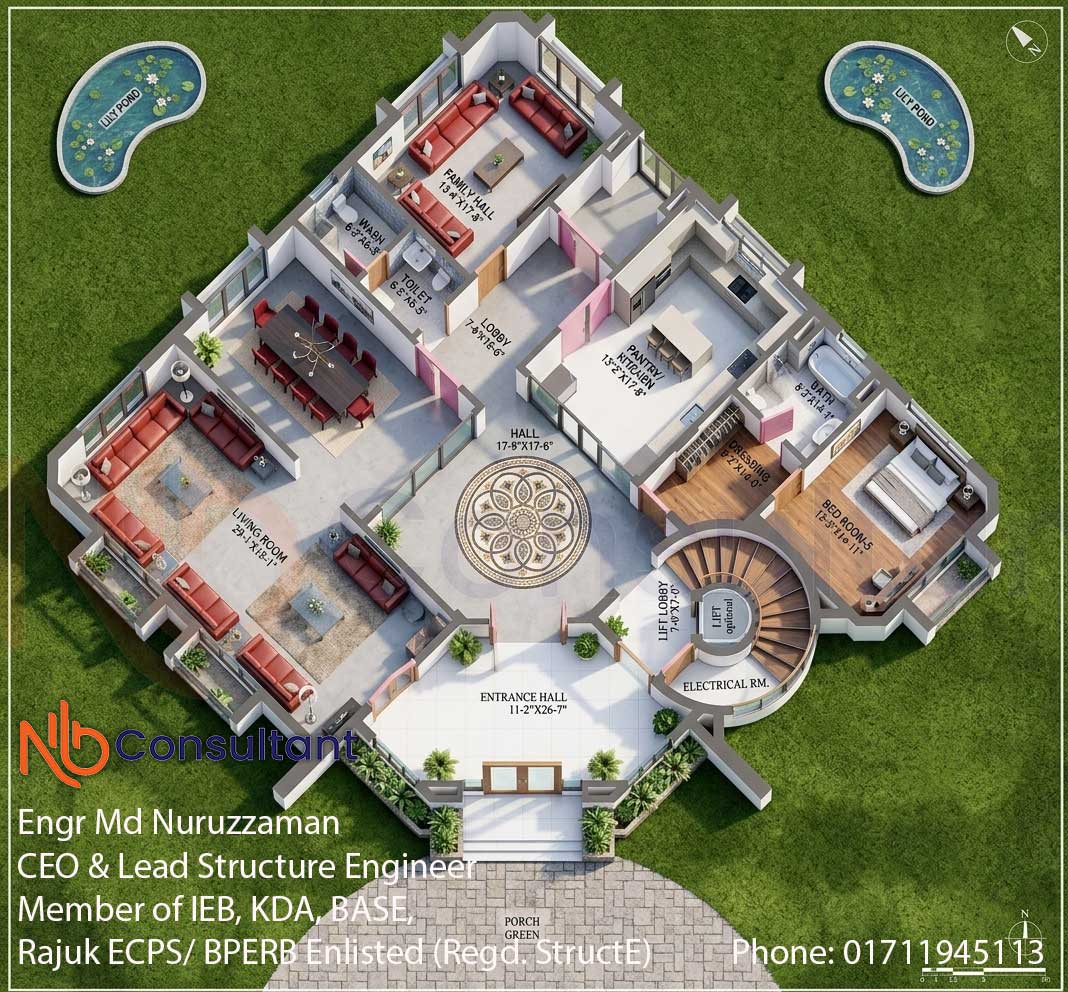
গুরুত্বপূর্ণভাবে, সমসাময়িক ডিজাইনে, সাধারণ “মিরর-ইমেজ” পদ্ধতি বাদ দিয়ে ভিন্নধর্মী, কাস্টমাইজড ইউনিট তৈরি করা হচ্ছে যা বিভিন্ন চাহিদা পূরণ করে, যেমনটি পাশের ছবিগুলোতে দেখা যাওয়া হাই-এন্ড ডিজাইনে চিত্রিত হয়েছে (চিত্র 1, 2, এবং 3)।
কেন ডুপ্লেক্স বাড়ি ডিজাইন আবাসিক বাজারে আধিপত্য বিস্তার করছে
ডুপ্লেক্স সম্পত্তির জনপ্রিয়তার এই উত্থান আকস্মিক নয়। এটি সুবিধার একটি শক্তিশালী ত্রয়ী দ্বারা চালিত: আর্থিক অপ্টিমাইজেশন, বহু-প্রজন্মের নমনীয়তা, এবং শহুরে ঘনত্ব।
1. আর্থিক লাভের ক্ষমতা
বাড়িওয়ালা এবং পেশাদার বিনিয়োগকারী উভয় পক্ষের জন্যই, এটি ডুপ্লেক্স বাড়ি ডিজাইন একটি ব্যতিক্রমী আর্থিক মডেল প্রদান করে। এটি কার্যকরভাবে আপনাকে একক জমিতে দুটি পৃথক আয়ের উৎস (অথবা একটি আয়ের উৎস এবং আপনার নিজের প্রধান বাসস্থান) তৈরি করার সুযোগ দেয়।
-
হাউস হ্যাকিং: সবচেয়ে সহজলভ্য কৌশল। একজন বাড়িওয়ালা একটি ইউনিটে থাকেন এবং দ্বিতীয়টি ভাড়া দেন, যা প্রায়শই এর একটি উল্লেখযোগ্য অংশ কভার করে, পুরোটা না হলেও, বন্ধকি ঋণ। এটি জীবনযাত্রার ব্যয় উল্লেখযোগ্যভাবে হ্রাস করে।
-
বিশুদ্ধ বিনিয়োগ: একক পরিবারের বাড়ির তুলনায় একই প্লটে ঘনত্ব এবং ভাড়ার ফলন সর্বাধিক করে কেবল একটি ভাড়া সম্পত্তি হিসাবে ডুপ্লেক্স তৈরি করা বা অধিগ্রহণ করা। জমিটি দ্বিগুণ দক্ষতার সাথে ব্যবহার করা হয়।
-
সম্পদের বৈচিত্র্যকরণ: অস্থির বাজারে, ডুপ্লেক্সগুলি অন্তর্নির্মিত স্থিতিস্থাপকতা প্রদান করে। যদি একটি ইউনিট খালি থাকে, সম্পত্তিটি এখনও আয় তৈরি করে।
2. আন্তঃপ্রজন্ম এবং নমনীয় জীবনযাপনের সমাধান
বহু-প্রজন্মের পরিবারের বৃদ্ধি (বয়স্ক বাবা-মায়ের সাথে বসবাসকারী প্রাপ্তবয়স্ক সন্তান, বা বয়স্ক বাবা-মা কাছাকাছি চলে আসছেন) ডুপ্লেক্সে একটি নিখুঁত স্থাপত্য নকশা অংশীদার খুঁজে পেয়েছে।
একটি চিন্তাশীল ডুপ্লেক্স বাড়ি ডিজাইন পরিবারগুলিকে কঠোর ভিজ্যুয়াল এবং শাব্দিক গোপনীয়তা বজায় রেখে সহায়তা এবং সামাজিক সংযোগের জন্য কাছাকাছি থাকার অনুমতি দেয়। এটি চূড়ান্ত আপস: একসাথে, কিন্তু আলাদা। নমনীয়তা আরও বিস্তৃত হয়:
-
“বুমেরাং” ইউনিট: স্বাধীনতার দিকে রূপান্তরকারী একজন তরুণ যুবকের জন্য।
-
অবসরকালীন ইউনিট: নাতি-নাতনিদের কাছাকাছি থাকতে চাওয়া ছোট করা বাবা-মায়ের জন্য।
-
হোম বিজনেস/স্টুডিও: দ্বিতীয় ইউনিটটিকে একটি প্রশস্ত, নিবেদিত ওয়ার্কস্পেস বা সৃজনশীল স্টুডিও হিসাবে ব্যবহার করা, এর নিজস্ব পেশাদার প্রবেশদ্বার সহ।
3. ঘনত্বের মাধ্যমে শহুরে বিস্তার রোধ
যেহেতু শহরগুলো আবাসন সংকটের মুখোমুখি হচ্ছে, জোনভিত্তিক নিয়মগুলো ক্রমবর্ধমানভাবে “মিসিং মিডল” আবাসনকে অগ্রাধিকার দিচ্ছে—যা একক পরিবারের বাড়ি এবং উচ্চুতুম অ্যাপার্টমেন্টের মধ্যবর্তী পরিসর। ডুপ্লেক্স হলো এই শ্রেণির প্রধান আকর্ষণ। ডুপ্লেক্স দায়িত্বশীলভাবে এলাকার ঘনত্ব বৃদ্ধি করে, বিদ্যমান অবকাঠামোকে অতিরিক্ত চাপে না ফেলে আরও বেশি পরিবারকে কাঙ্ক্ষিত সুবিধাগুলো গ্রহণের সুযোগ করে দেয়।
একটি চমৎকার ইউজার এক্সপেরিয়েন্সের জন্য ডিজাইন: মূল স্থাপত্য নীতিসমূহ
একটি ভালো ডুপ্লেক্স তৈরি করা মানে কেবল দুটি একই রকম ইউনিট নির্মাণ করা নয়। একটি দারুণ ডুপ্লেক্স বাড়ি ডিজাইন ডিজাইন যৌথভাবে বসবাসের সূক্ষ্ম মনস্তত্ত্বকে বিবেচনা করে এবং প্রতিটি বাসিন্দার স্বাধীনতাকে অগ্রাধিকার দেয়। আধুনিক স্থপতিরা নিচের বিষয়গুলোর ওপর জোর দেন:
অ্যাকোস্টিকস বা শব্দ নিয়ন্ত্রণ: অদৃশ্য ফায়ারওয়াল
একাধিক পরিবার থাকে এমন আবাসনে মানুষের প্রধান অভিযোগ হলো শব্দ দূষণ। একটি পেশাদার ডুপ্লেক্স বাড়ি ডিজাইন স্থাপত্য নকশা শব্দ পৃথকীকরণের ক্ষেত্রে কোডের নির্দেশনার চেয়েও অনেকদূর এগিয়ে যায়। কৌশলগুলোর মধ্যে রয়েছে:
-
স্ট্যাগারড স্টাড ওয়াল বা জিগজ্যাগ দেওয়াল: জিগজ্যাগ সাপোর্টের মাধ্যমে একটি দেওয়ালের ক্যাভিটি তৈরি করা যাতে কম্পন সরাসরি কাঠামোর মধ্য দিয়ে চলাচল করতে না পারে।
-
ভারী উপাদানসমূহ: কংক্রিট ব্লক ব্যবহার করে, গ্রীন গ্লু সহ ড্রাইওয়ালের ডাবল লেয়ার, এবং শব্দ কমানোর জন্য রেজিলিয়েন্ট চ্যানেল।
-
ফ্লোর-টু-ফ্লোর সেপারেশন বা তলা থেকে তলার পৃথকীকরণ (স্ট্যাকড ইউনিট): অ্যাকোস্টিক আন্ডারলেমেন্ট ব্যবহার করে, সাউন্ড ইনসুলেশন সহ ড্রপড সিলিং, এবং ইমপ্যাক্ট সাউন্ড বা পায়ের শব্দ কমাতে ভারী ফ্লোর স্ল্যাব।
-
জোনিং (পাশাপাশি): লিভিং এরিয়া বা মাস্টার বেডরুমের পরিবর্তে সাধারণ দেয়ালের পাশে কম শব্দের এলাকাগুলো (যেমন ক্লোজেট বা সিঁড়ি) স্থাপন করা।
গোপনীয়তা ও প্রবেশপথের মনস্তত্ত্ব
প্রকৃত স্বাধীনতা শুরু হয় প্রবেশপথ থেকেই। আলাদা, স্বতন্ত্র প্রবেশপথ অত্যন্ত গুরুত্বপূর্ণ।
-
দৃশ্যমান পৃথকীকরণ: প্রতিটি প্রধান দরজা দেখতে একটি ব্যক্তিগত বাড়ির প্রবেশপথের মতো মনে হওয়া উচিত। দরজাগুলোকে একে অপরের থেকে দূরে কোনাকুনিভাবে রেখে, স্ক্রিন ওয়াল ব্যবহার করে, অথবা ল্যান্ডস্কেপিংয়ের মাধ্যমে এটি অর্জন করা যেতে পারে।
-
ব্যক্তিগত বহিরাঙ্গন স্থান: একটি স্ট্যাকড ডুপ্লেক্সে, এটি একটি চ্যালেঞ্জিং হলেও অত্যন্ত গুরুত্বপূর্ণ বিষয়। নিচের ইউনিটটি ইয়ার্ড বা উঠান পায়, অন্যদিকে ওপরের ইউনিটটি একটি প্রশস্ত, ঢাকার বারান্দা, প্রায়শই গোপনীয়তা স্ক্রিন সহ ডিজাইন করা হয়, যেমনটি চিত্র 3 এর ওপরের ইউনিট ডিজাইনে দেখা যায়। পাশাপাশি ইউনিটের জন্য, ইয়ার্ডগুলো শক্তপোক্ত ফেন্সিং এবং ল্যান্ডস্কেপিং দিয়ে আলাদা করা হয়েছে।
একটি যৌথ ভবনে প্রাকৃতিক আলোর সর্বোচ্চ ব্যবহার
একটি যৌথ দেওয়ালের মাধ্যমে, ইউনিটের পুরো একটি দিক প্রায়ই রোদ থেকে বঞ্চিত থাকে। উদ্ভাবনী ডুপ্লেক্স বাড়ি ডিজাইন পদ্ধতিগুলো অন্ধকার ইউনিট দূর করতে বেশ কিছু কৌশল ব্যবহার করে:
-
কোনা ইউনিট: একটি L বা U আকৃতির স্ট্রাকচার তৈরি করা যাতে দুটি ইউনিটই বহুমুখী আলো-বাতাস পেতে পারে।
-
উঠান এবং লাইট ওয়েল: নকশার ভেতরের দিকে একটি কেন্দ্রীয় ফাঁকা জায়গা (একটি লাইট অ্যাট্রিয়াম) ভেতরের অংশে পর্যাপ্ত প্রাকৃতিক আলো পৌঁছে দিতে পারে, যা রান্নাঘর এবং সেন্ট্রাল হল উভয়কেই উপকৃত করে। এই পদ্ধতিটি উদাহরণস্বরূপ ভিজ্যুয়ালাইজেশনে (চিত্র 1) অত্যন্ত চমৎকারভাবে ফুটিয়ে তোলা হয়েছে, যেখানে সেন্ট্রাল HALL (এর জমকালো মেডেলিয়ন দ্বারা নির্দেশিত) পর্যাপ্ত প্রাকৃতিক আলো পায়।
-
স্কাইলাইট এবং ক্লারিস্টোরি জানালা: কেন্দ্রীয় অঞ্চলগুলোকে আলোকিত করার জন্য ছাদের অংশে উঁচুতে জানালা ব্যবহার করা।
কেস স্টাডি: হাই-এন্ড এবং আকর্ষণীয় ডুপ্লেক্স ডিজাইনের একটি মাস্টারক্লাস
চলুন আমরা সমসাময়িক উদাহরণের দিকে নজর দিই ডুপ্লেক্স বাড়ি ডিজাইন চিত্র 1-এ ভিজ্যুয়ালাইজ করা হয়েছে, 2, এবং 3। এই প্রজেক্টটি গতানুগতিক ধারা থেকে বেরিয়ে দুটি অনন্য রূপ দিয়েছে, একই ছাদের নিচে প্রিমিয়াম জীবনযাত্রার পরিবেশ, একটি মৌলিক ডিজাইন টুল হিসেবে হাইপার-রিয়েলিস্টটিক 3D ভিজ্যুয়ালাইজেশন ব্যবহার করে।
নিচ তলা: একটি গ্র্যান্ড এন্ট্রান্স এবং ওপেন প্ল্যান (চিত্র 2)
নিচের ইউনিটের প্রধান প্রবেশদ্বারটি অত্যন্ত আকর্ষণীয়। একটি ছোট ও আঁটসাঁট প্রাঙ্গণের পরিবর্তে, আমরা একটি প্রশস্ত ‘ENTRANCE HALL’ দেখতে পাই (ফ্লোর প্ল্যান ছবিতে চিহ্নিত) যা টাইলস করা মেঝে এবং ইন্টিগ্রেটেড ল্যান্ডস্কেপিং সহ একটি ট্রানজিশন জোন হিসেবে কাজ করে। এটি একটি বিশাল ‘HALL’ (চিহ্নিত) এ নিয়ে যায় যাতে রয়েছে একটি চমৎকার, জমকালো সেন্ট্রাল ফ্লোর মেডেলিয়ন—যা দেখলেই বোঝা যায় এটি একটি কাস্টমাইজড, হাই-এন্ড রেসিডেন্স।
ডিজাইনটিতে একটি সত্যিকারের ওপেন-প্ল্যান ফ্লোর ব্যবহার করা হয়েছে (যেমনটি প্রম্পটে অনুরোধ করা হয়েছে):
-
ইন্টিগ্রেটেড লিভিং: ‘LIVING ROOM’ সরাসরি সেন্ট্রাল হলের সাথে মিশে গেছে, যা পরবর্তীতে ডাইনিং এবং রান্নাঘরের এলাকার সাথে নির্বিঘ্নে সংযুক্ত হয়েছে।
-
জোন ডিফারেন্সিয়েশন: খোলা মেলামেশার জায়গা থাকা সত্ত্বেও, মেঝের পরিবর্তনের মাধ্যমে জায়গাগুলোকে আলাদা করা হয়েছে (কার্পেট বনাম টাইলস), আসবাবের বিন্যাস, এবং একটি চমৎকার সমসাময়িক বৈশিষ্ট্য—একটি বাঁকা অ্যাকসেন্ট ওয়াল যা একটি ‘LIFT LOBBY’ তৈরি করে এবং একটি আকর্ষণীয় সিঁড়ি ধারণ করে।
এই ডিজাইনটি সেন্ট্রাল লাইট ওয়েল (‘HALL’ এবং এর ওপরের ‘CUT OUT’ ফিচার) অত্যন্ত চমৎকারভাবে ব্যবহার করেছে পুরো ফ্লোরের জন্য একটি অ্যাঙ্কর পয়েন্ট নিশ্চিত করতে, যাতে সেন্ট্রাল স্পেসগুলোও উজ্জ্বল এবং প্রশস্ত মনে হয়।
প্রথম তলা: ব্যক্তিগত অভয়ারণ্য এবং উন্নত জীবনযাত্রা (চিত্র 3)
উপরের ইউনিটটি, চিত্র 3 এ দেখানো হয়েছে, সম্পূর্ণ ভিন্ন একটি রূপ নেয়, যা প্রমাণ করে যে একটি ডুপ্লেক্স বাড়ি ডিজাইন আলাদা জীবনযাত্রার অভিজ্ঞতা দিতে পারে। এতে যাতায়াতের জন্য একটি নির্দিষ্ট বহিরাগত সিঁড়ি রয়েছে, যা নিচ তলা থেকে সম্পূর্ণ পৃথকীকরণ নিশ্চিত করে।
প্রথম তলাটি (প্রকৃতপক্ষে এই ইউনিটের জন্য নিচ তলা) প্রাইভেট বেডরুম এবং বাথিং কোয়ার্টার হিসেবে ডিজাইন করা হয়েছে। কেন্দ্রীয় হল এবং সিঁড়িটি নিচের তলার জ্যামিতিক নকশার সাথে সামঞ্জস্যপূর্ণ, যা ধারাবাহিকতা রক্ষা করে, তবে ফ্লোরের ফিনিশিং (হার্ডউড এবং কাস্টম টাইলস) ভিন্ন। এই ডিজাইনে বিলাসবহুল বেডরুম স্যুটগুলোকে প্রাধান্য দেওয়া হয়েছে (‘BED ROOM-3’, ‘BED ROOM-4’, ‘BED ROOM-5’, ‘BED ROOM-6’, প্রতিটিতে রয়েছে ডেডিকেটেড ‘DRESSING’ এবং বিস্তারিত ‘BATH’ এরিয়া)।
এই লেআউটটি উচ্চ মাত্রার ব্যক্তিগতকরণের পরিচয় দেয়, যা প্রমাণ করে যে বহু-পরিবারভিত্তিক আবাসে কাস্টম বিলাসবহুলতার সাথে কোনো আপস করতে হয় না। প্রতিটি বেডরুম স্যুটকে একটি স্বাধীন রিট্রিট বা বিশ্রামের জায়গার মতো মনে হয়।
দ্বিতীয় তলা: লফট রিট্রিট এবং স্কাইলাইন লিভিং (চিত্র 3 – টপ সেকশন)
সম্ভবত এই মাল্টি-লেভেল ভবনের সবচেয়ে অনন্য বৈশিষ্ট্য হলো ডুপ্লেক্স বাড়ি ডিজাইন এটি ওপরের ইউনিট’র চূড়ান্ত লেভেল। সিঁড়িটি একটি আকর্ষণীয় ‘STAIR LOBBY’-এ নিয়ে যায় যা একটি বড়, আলোয় ভরপুর ‘FAMILY HALL’ (চিহ্নিত)-এর দিকে খোলে।
এই ওপরের জায়গাটি একটি সম্পূর্ণ লিভিং এলাকা, যেখানে একটি পূর্ণাঙ্গ, আধুনিক ‘PANTRY/KITCHEN’ রয়েছে। বড় গ্লেজড প্যানেলগুলো ইনডোর ফ্যামিলি হলকে একটি চমৎকার, ‘U’ আকৃতির ‘LILY POND’ র্যাপ-আউন্ড বারান্দা/ছাদের সাথে যুক্ত করেছে (চিহ্নিত)। এই টেরেসটি কেবল মনোরম দৃশ্য দেখার জন্যই ডিজাইন করা হয়নি, বরং এতে সমন্বিত ওয়াটার ফিচার এবং ল্যান্ডস্কেপিং রয়েছে, যা একটি উঁচু, ব্যক্তিগত অভয়ারণ্য প্রদান করে যা নিচতলার উঠান থেকে সম্পূর্ণ আলাদা অনুভূতি দেয়। এই ছাদের ওপরের রিট্রিটটি একটি দারুণ মাস্টারপিস, যা দ্বিতীয় ইউনিটটিকে একটি প্রিমিয়াম আউটডোর অভিজ্ঞতা দেয় যা যেকোনো একক পরিবারের বাড়িকে টেক্কা দিতে পারে।
লক্ষ্য ভিজ্যুয়ালাইজ করা: 3D মডেলিংয়ের অপরিহার্যতা
এই ছবিগুলো আধুনিক সময়ের একটি অত্যন্ত গুরুত্বপূর্ণ পর্যায় তুলে ধরে ডুপ্লেক্স বাড়ি ডিজাইন: ফটোরেিয়ালিস্টিক ভিজ্যুয়ালাইজেশন। একটি ডুপ্লেক্স তৈরির সাথে জটিল স্থান এবং উল্লম্ব সমন্বয় জড়িত। 3D কাটা অংশ বা কাটওয়ে ভিউ নিচের কাজগুলোর জন্য অপরিহার্য:
-
স্থানগত লজিক যাচাই করা: ইউনিট 2-এর জন্য একাধিক লেভেলের যাতায়াত সহজ রাখা এবং এর ব্যক্তিগত জোনগুলো যেন ইউনিট 1-এর বসার ঘরের সাথে শব্দ বা দৃশ্যগতভাবে সাংঘর্ষিক না হয় তা নিশ্চিত করা।’
-
উপাদান নির্বাচন: নির্দিষ্ট কাস্টম উপাদানগুলো (যেমন নিচতলার বিশদ মেডেলিয়ন বা ওপরের লিলি পন্ড) কীভাবে স্থাপত্য নকশার সাথে মিশে আছে তা দেখা।
-
ক্লায়েন্টের সম্মতি এবং প্রি-লিজিনো: এই মানের রেন্ডার মালিক এবং বিনিয়োগকারীদের সমাপ্ত স্থানটির মধ্য দিয়ে “হাঁটতে” দেয়, ঝুঁকি কমায় এবং অর্থায়ন বা প্রি-লিজকে ত্বরান্বিত করে।
বিভিন্ন বাজারের চাহিদার সাথে ডুপ্লেক্স হাউস ডিজাইন মানিয়ে নেওয়া
যদিও এই কেস স্টাডিতে একটি বিলাসবহুল, মাল্টি-লেভেল সমাধান উপস্থাপন করা হয়েছে, চমৎকার ডুপ্লেক্স ডিজাইনের মূল নীতিগুলো বিভিন্ন মূল্য সীমার সাথে মানিয়ে নেওয়া যেতে পারে।
এন্ট্রি-লেভেল এবং ওয়ার্কফোর্স হাউজিং
ফোকাস কাস্টম বিলাসিতা থেকে দক্ষতা এবং ব্যয় নিয়ন্ত্রণের দিকে সরে যায়, তবে গোপনীয়তার ওপর জোর দেওয়া অব্যাহত থাকে।
-
সহজ স্ট্যাকড ইউনিট: একটি সহজবোধ্য “আপ-ডাউন” ডিজাইন প্রায়শই সবচেয়ে সাশ্রয়ী হয়। ওপরের ইউনিটের গোপনীয়তা নিচতলার ফয়ের এবং সরাসরি একটি নিরাপদ সিঁড়ির মাধ্যমে অর্জন করা হয়।
-
মিরর-ইমেজ (সংশোধিত): স্ট্যান্ডার্ড “মিরর-ইমেজ” ডিজাইনটি ফেসাদে সামান্য পরিবর্তন এনে অথবা একেকটি ইউনিটের নিজস্ব স্বকীয়তা ফুটিয়ে তুলতে ইউনিক বারান্দা বা পোর্চের বিস্তারিত যুক্ত করে উন্নত করা যেতে পারে। বাজেটের একটি বড় অংশ হাই-এন্ড ফিনিশিংয়ের পরিবর্তে সাউন্ড প্রুফিং বা শব্দেরোধক ব্যবস্থার পেছনে খরচ করা হয়।
-
যৌথ অবকাঠামো: নির্মাণ কাজের সুবিধার্থে ডিজাইনে প্লাম্বিং রান এবং ইউটিলিটি কোর বসানোর কাজটি ন্যূনতম রাখা হয়েছে।
মিড-মার্কেট “মিসিং মিডল”
এটি অনেক শহুরে ডেভেলপারদের জন্য একটি আদর্শ পর্যায়। এটি বিচক্ষণ সুযোগ-সুবিধা এবং যৌক্তিক দামের মধ্যে ভারসাম্য বজায় রাখে।
-
ফিনিশিংয়ে কাস্টমাইজেশন: ইউনিটগুলোর স্ট্রাকচার এক হলেও হোমবায়ারদের জন্য পূর্বনির্ধারিত ইন্টেরিয়র ফিনিশ প্যাকেজ (যেমন,যথা, “মডার্ন মিনিমালিস্ট” বনাম “ওয়ার্ম ইন্ডাস্ট্রিয়াল”)-এর মধ্যে পছন্দ করার সুযোগ থাকে।
-
উন্নত আকৌস্টিক ইঞ্জিনিয়েরিং: সাব-ফ্লোরিং সাউন্ড কন্ট্রোল (স্ট্যাকড ইউনিটের জন্য) অথবা একটি প্রকৃত, ডাবল-ফায়ারওয়াল সিস্টেমে (সাইড-বাই-সাইড ইউনিটের জন্য) বেশি বিনিয়োগ করা।
-
প্রাইভেট সুযোগ-সুবিধা: প্রতিটি ইউনিটে একটি প্রাইভেট বারান্দা অথবা ছোট, নির্দিষ্ট উঠান বা প্যাটিও থাকতে হবে। সমন্বিত, প্রাইভেট স্টোরেজ বা সংরক্ষণ ব্যবস্থা এই ক্যাটাগরিতে অত্যন্ত মূল্যবান একটি বৈশিষ্ট্য।
আপনার ডুপ্লেক্স ডিজাইনের ভবিষ্যৎ উপযোগী করা
প্রযুক্তি এবং অগ্রাধিকার পরিবর্তনের সাথে সাথে, সবচেয়ে দূরদর্শী ডুপ্লেক্স বাড়ির ডিজাইনগুলোতে যেসব বিষয় অন্তর্ভুক্ত করা হচ্ছে:
স্মার্ট হোম এবং আইওটি ইন্টিগ্রেশন
একটি আধুনিক ডুপ্লেক্সের প্রতিটি ইউনিটের জন্য পরিশীলিত, স্বাধীন স্মার্ট সিস্টেম প্রয়োজন। এর মধ্যে রয়েছে আলাদা, নিরাপদ ওয়াই-ফাই নেটওয়ার্ক, স্মার্ট লক, থার্মোস্ট্যাট কন্ট্রোল (যোনাল এইচভ্যাক দক্ষতার জন্য), এবং সমন্বিত নিরাপত্তা ব্যবস্থা। গুরুত্বপূর্ণভাবে, বিবাদ এড়াতে ইউটিলিটি মনিটরিং আলাদা করা উচিত।
এনার্জি ট্রানজিশনের জন্য ডিজাইন
প্রতিটি ইউনিটে আলাদা সাব-মিটার থাকতে হবে এবং সোলার পিভি অ্যারে ইনস্টল করার জন্য প্রি-ওয়্যার করা উচিত। স্ট্যাকড ইউনিটের ক্ষেত্রে, ইউনিট 2-এর জন্য ছাদ ব্যবহারের পথ স্পষ্টভাবে নির্ধারিত থাকতে হবে। তাছাড়া, প্রতিটি ইউনিটের পার্কিং স্পেসে ডেডিকেটেড ইভি (ইলেকট্রিক ভেহিক্যাল) চার্জিং পোর্ট রাখা এখন প্রিমিয়াম নির্মাণের জন্য প্রায় বাধ্যতামূলক একটি প্রয়োজনীয়তা।
গম্যতা ও অভিযোজনযোগ্যতা
একটি সত্যিকারের বুদ্ধিমান ডুপ্লেক্স বাড়ি ডিজাইন ভবিষ্যতের কথা বিবেচনা করে। ন্যূনতম একটি ইউনিটকে (সাধারণত গ্রাউন্ড ফ্লোর) সার্বজনীন গম্যতার মানদণ্ড অনুসারে ডিজাইন করা উচিত, প্রশস্ত দরজা, জিরো-এন্ট্রি শাওয়ার, এবং গ্র্যাব বার ইনস্টল করার জন্য রিইনফোর্সড দেওয়ালসহ। কিছু সাইড-বাই-সাইড ডিজাইন পরিবর্তনযোগ্য “কানেক্টর” দেওয়াল দিয়ে তৈরি করা হচ্ছে, যা পরিবারের প্রয়োজনের পরিবর্তন হলে দুটি ইউনিটকে একত্রিত করে একটি বড় সিঙ্গেল-ফ্যামিলি বাড়িতে রূপান্তর করার সুবিধা দেয়।
উপসংহার: ডুপ্লেক্স জীবনযাপনের নতুন মানদণ্ড
আধুনিক ডুপ্লেক্স বাড়ি ডিজাইন শুধুমাত্র একটি আবাসন শৈলী নয়; এটি জীবনযাপন ও বিনিয়োগের একটি কৌশলগত উপায়। ব্যক্তিগত স্বাধীনতাকে অগ্রাধিকার দিয়ে, উন্নত আকৌস্টিক্সে বিনিয়োগ করে, উদ্ভাবনী জ্যামিতির মাধ্যমে (যেমন কেন্দ্রীয় অ্যাট্রিয়াম) প্রাকৃতিক আলোর সর্বোচ্চ ব্যবহার নিশ্চিত করে, এবং 3D ভিজ্যুয়ালাইজেশনের ক্ষমতাকে কাজে লাগিয়ে, আমরা এমন ডুপ্লেক্স তৈরি করতে পারি যা আরাম, সৌন্দর্য, এবং অর্থনৈতিক স্থায়িত্বের ক্ষেত্রে নতুন মানদণ্ড স্থাপন করে।
শীর্ষতলার লিলি-পন্ড অভয়ারণ্যসহ একটি বিলাসবহুল মাল্টি-লেভেল কম্পাউন্ড তৈরি করা হোক, অথবা একটি স্মার্ট, সহজলভ্য এন্ট্রি-লেভেল বাড়ি, সফলতার রহস্য হলো সাধারণ দেওয়ালকে একটি ভাগ করা সীমাবদ্ধতা হিসেবে না দেখে, উদ্ভাবনের একটি যৌথ ফাউন্ডেশন হিসেবে দেখা। ডুপ্লেক্স কোনো সমঝোতা নয়; এটি আধুনিক বিশ্বের জটিল চাহিদার একটি স্থাপত্য নকশাভিত্তিক সমাধান।
আরও দেখুন
একই ধরনের প্রজেক্ট
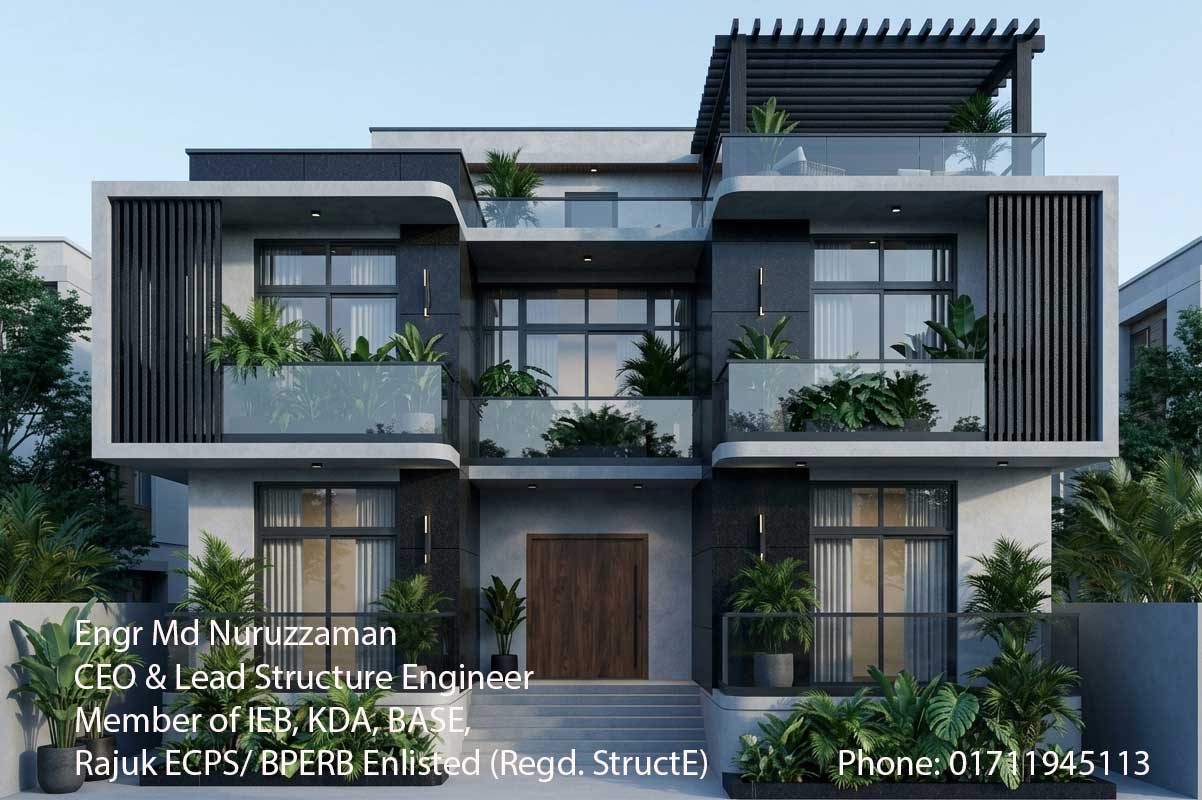
2000 স্কয়ার ফুট ডুপ্লেক্স হাউস গাইড: প্ল্যান, খরচ
2000 স্কয়ার ফুট ডুপ্লেক্স হাউস 2000 স্কয়ার ফুট ডুপ্লেক্স হাউস মোট খরচ 95 লক্ষ 2000 স্কয়ার ফুট ডুপ্লেক্স হাউস 2000 স্কয়ার ফুট ডুপ্লেক্স ফ্লোর প্ল্যান হাউস 2000 স্কয়ার ফুট ডুপ্লেক্স হাউস- সামনের দৃশ্য নতুন রঙ…
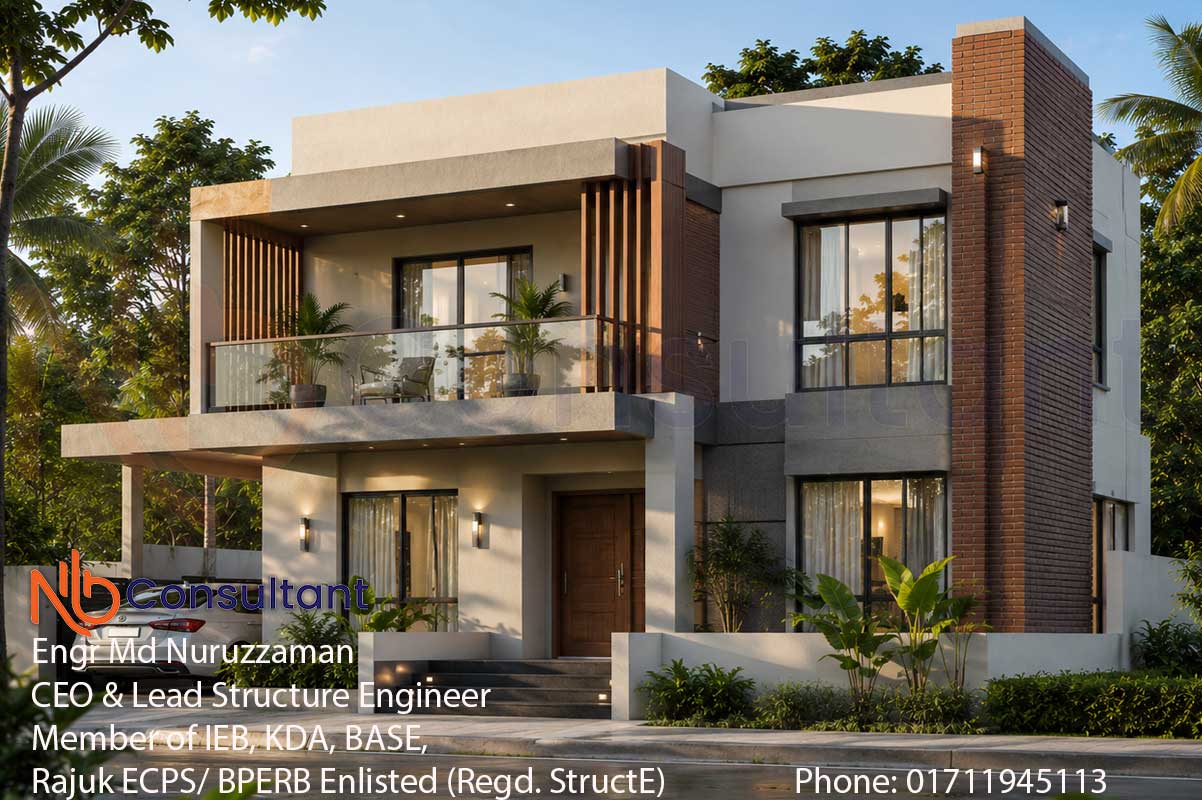
গ্রামে 5 বেডরুমের ডুপ্লেক্স বাড়ির ডিজাইন
গ্রামে 5 বেডরুমের ডুপ্লেক্স বাড়ির ডিজাইন গ্রামে 5 বেডরুমের ডুপ্লেক্স বাড়ির ডিজাইন - নজরকাড়া বাড়ির ডিজাইন গ্রামে 5 বেডরুমের ডুপ্লেক্স বাড়ির ডিজাইন…
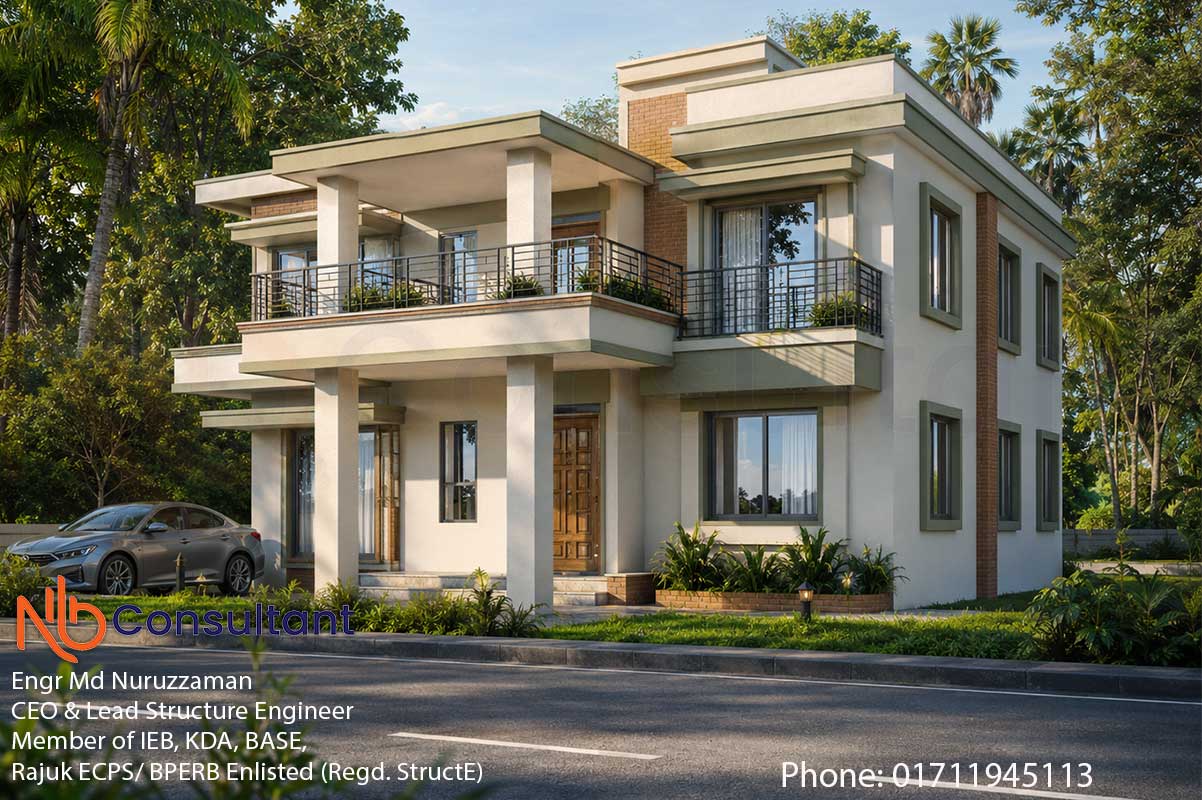
গ্রামে ডুপ্লেক্স বাড়ির ডিজাইন
ফরিদপুরে গ্রামের বাড়ির জন্য একটি ডুপ্লেক্স বাড়ির ডিজাইন। এই ভবন সম্পর্কে: ধরন: ডুপ্লেক্স, মোট 6 বেডরুম নিচতলা: 2 বেড ড্রইং ডাইনিং রুম 1…